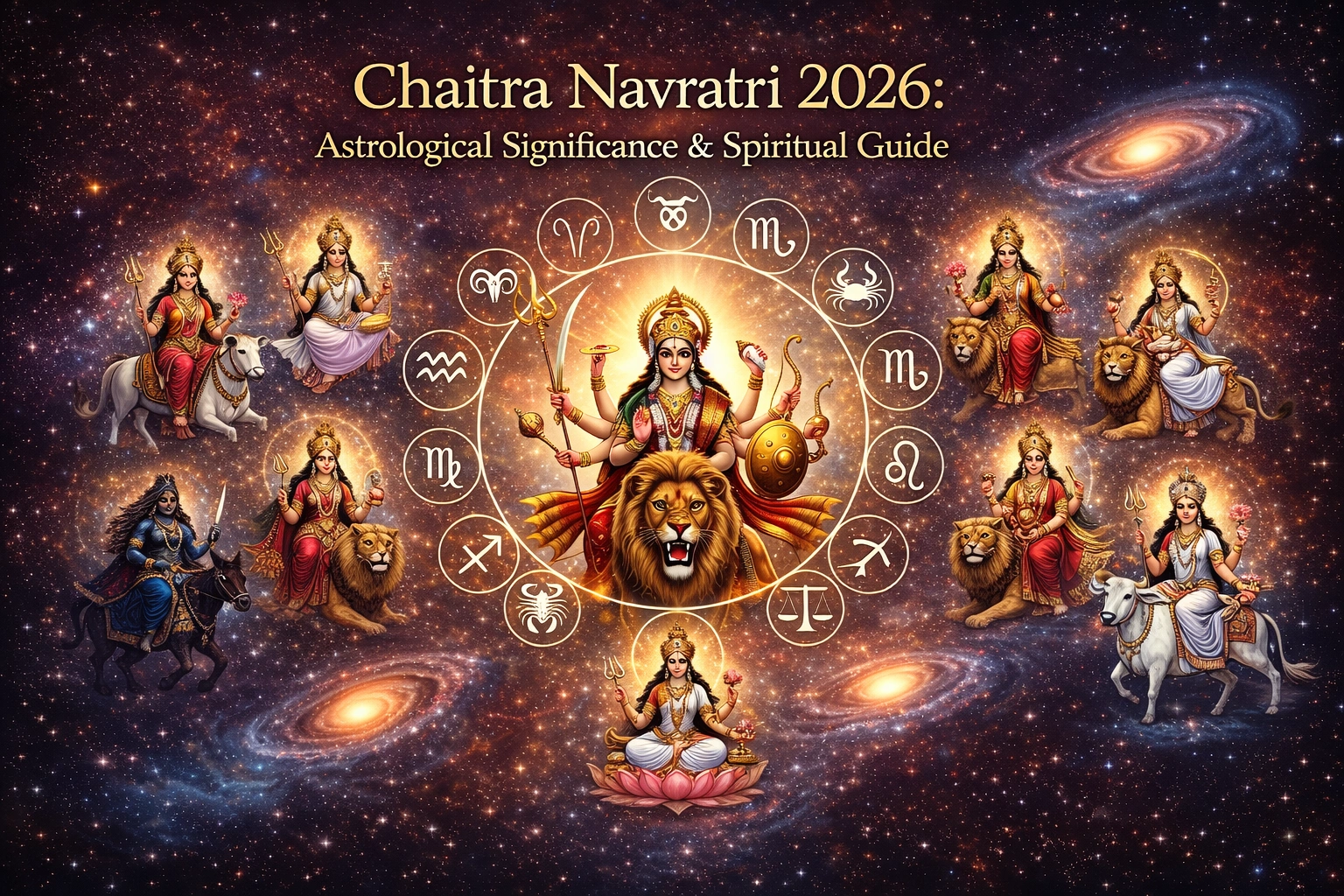
Chaitra Navratri is one of the most spiritually significant festivals in the Vedic tradition. Observed during the waxing phase of the lunar cycle in the Hindu month of Chaitra, this sacred period represents the awakening of Shakti — the universal feminine energy that governs creation, balance, and transformation.
From an astrological perspective, Navratri is not merely a religious celebration but a powerful cosmic window when planetary energies, lunar vibrations, and spiritual consciousness align to amplify devotion and inner transformation.
In 2026, Chaitra Navratri will be observed from 19 March to 27 March, beginning with the sacred ritual of Ghatasthapana and concluding with Ram Navami.
During these nine days, devotees worship the nine manifestations of Goddess Durga, each symbolizing a different stage of spiritual evolution and energetic purification.
In Vedic astrology, Navratri is considered a period of heightened cosmic activity. The lunar cycle during this time enhances spiritual practices such as meditation, mantra chanting, and sadhana.
The festival occurs during Shukla Paksha (waxing moon phase), when lunar energy gradually increases. This phase is believed to strengthen:
• Spiritual Focus
• Emotional Clarity
• Inner Transformation
• Manifestation Power.
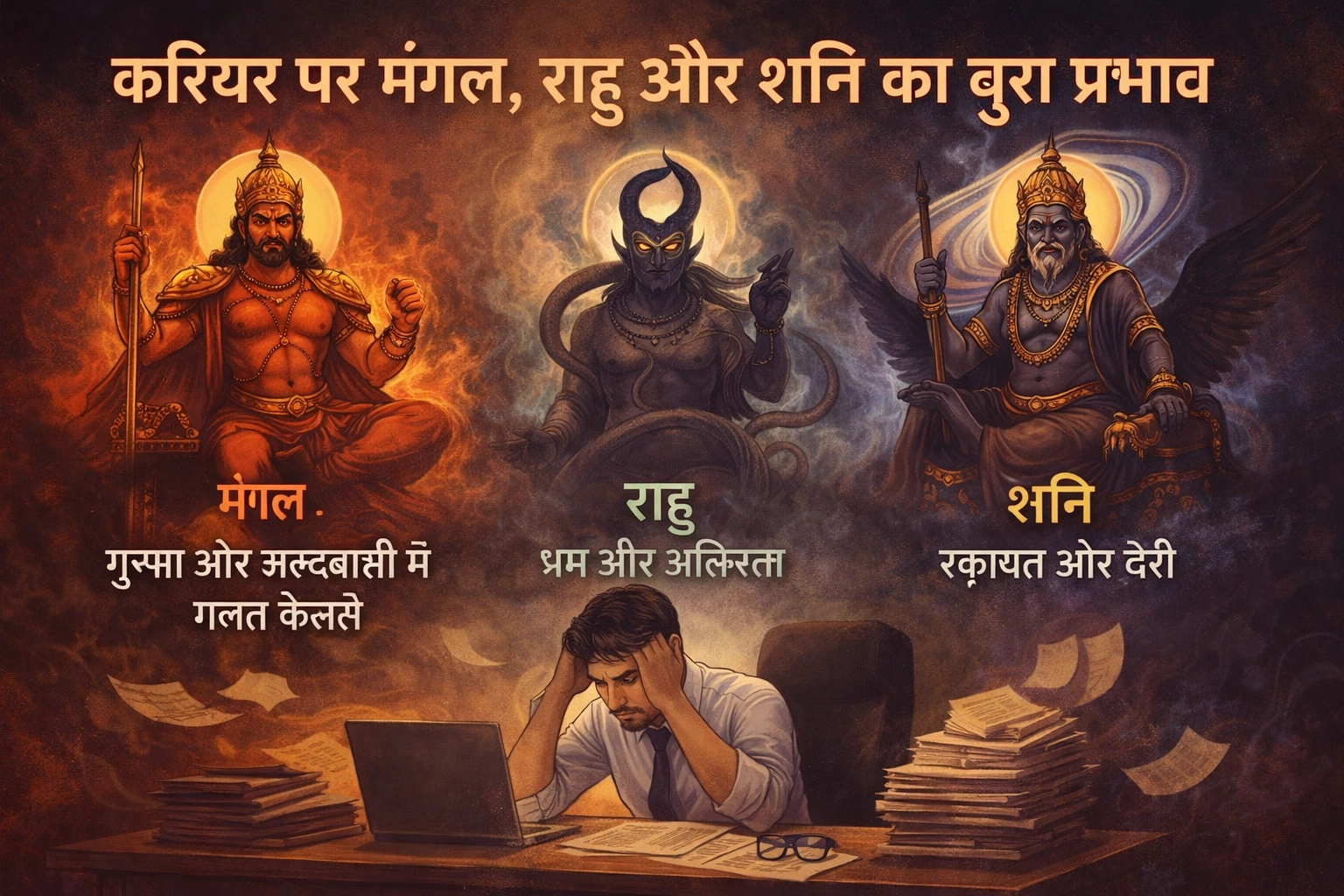
Astrologically, Navratri is also a favorable time to perform remedies for challenging planetary influences, particularly those related to Rahu, Ketu, Saturn, and Mars.
Many astrologers recommend Durga Sadhana during Navratri to remove obstacles, strengthen planetary harmony, and invite divine protection.
Chaitra Navratri in 2026 will begin on 19 March 2026 and continue for nine days.
Time:
06:52 AM – 09:44 AM
Abhijit Muhurat:
11:20 AM – 12:09 PM
Pratipada Tithi Begins:
19 March 2026 – 06:52 AM
Pratipada Tithi Ends:
20 March 2026 – 04:52 AM
The ritual of Ghatasthapana symbolizes the invocation of divine cosmic energy into the sacred space of the household altar.
Each day of Navratri represents a distinct spiritual vibration through the worship of Navdurga.
|
|
|
|
|
|
|
|
|
|
|
|
|
|
|
|
|
|
|
|
|
|
|
|
|
|
|
|
|
|
|
|
|
|
|
|
|
|
|
|
These nine stages symbolize the journey from material consciousness to spiritual enlightenment.
The festival begins with Kalash Sthapana, a sacred ritual that represents the presence of divine energy.
A kalash filled with water is placed on soil where barley seeds are sown. A coconut wrapped in red cloth is placed on top, symbolizing life, fertility, and divine protection.
Devotees perform daily prayers by:
• Lighting a diya
• Offering flowers and fruits
• Chanting Durga mantras
• Performing aarti
Many devotees also observe satvik fasting, consuming simple vegetarian foods.
Navratri is considered an ideal time for mantra chanting and meditation.
Popular mantras include:
Chanting these mantras creates powerful spiritual vibrations believed to remove negativity and strengthen inner consciousness.
On the eighth or ninth day, young girls are worshipped as manifestations of Divine Feminine Energy.
This ritual symbolizes reverence for purity, innocence, and divine power.
Navratri is celebrated across India with diverse traditions.
Beyond rituals and festivities, Navratri represents the inner battle between positive and negative energies within human consciousness.
The nine days symbolize the gradual removal of negative traits such as:
• Fear
• Ego
• Anger
• Ignorance
Through devotion and discipline, devotees cultivate virtues such as:
• Courage
• Wisdom
• Compassion
• Spiritual Awareness
Worship of Goddess Durga during Navratri symbolizes the awakening of divine power within the self.
Astrologically, Navratri is considered one of the most powerful periods for spiritual remedies and planetary balance.
Practices performed during this time are believed to:
• Reduce the influence of malefic planets
• Strengthen positive planetary energies
• Remove karmic obstacles
• Enhance spiritual awareness
Many spiritual practitioners perform Durga Sadhana, meditation, and charity during Navratri to accelerate spiritual growth.
Chaitra Navratri is a sacred period that blends spiritual devotion, cosmic energy, and astrological significance. It offers devotees a unique opportunity to reconnect with divine consciousness and seek blessings for strength, protection, and prosperity.
As Navratri 2026 approaches, devotees can prepare to welcome the divine energy of Goddess Durga through prayer, meditation, and disciplined spiritual practice.
These nine sacred days remind us that true transformation begins within, and divine energy always supports those who walk the path of devotion and righteousness.
Chaitra Navratri in 2026 will begin on 19 March 2026 (Thursday) with the sacred ritual of Ghatasthapana, which marks the invocation of Goddess Durga’s divine energy.
Navratri 2026 will conclude on 27 March 2026, and the final day is celebrated as Ram Navami, the birth anniversary of Lord Rama.
From a Vedic astrology perspective, Chaitra Navratri occurs during the waxing phase of the moon (Shukla Paksha), a time when spiritual energy gradually increases. This period is considered highly auspicious for Durga Sadhana, mantra chanting, meditation, and planetary remedies.
Ghatasthapana, also known as Kalash Sthapana, is the ritual performed on the first day of Navratri to invoke the presence of Goddess Durga. The Kalash symbolizes life, prosperity, and divine energy, and its installation marks the official beginning of the festival.
The nine forms of Goddess Durga worshipped during Navratri are collectively known as Navdurga:
Each form represents different spiritual qualities such as strength, purity, wisdom, and divine protection.
Fasting during Navratri is believed to purify the body and mind, allowing devotees to focus on spiritual practices such as prayer, meditation, and mantra chanting. Satvik foods are consumed to maintain spiritual discipline during the nine days.
Some powerful mantras chanted during Navratri include:
These mantras are believed to invoke divine protection, remove negative energies, and enhance spiritual strength.
Navratri represents the awakening of divine feminine energy (Shakti). Spiritually, the nine days symbolize the journey of removing negativity and developing positive qualities such as courage, wisdom, and compassion.
Navratri is celebrated differently across India:
Despite regional variations, the central theme remains devotion to Goddess Durga.

"We envision a future of universal, inherent well-being, achieved by harmonizing the deep knowledge of Vedic Astrology with the advancements of modern medicine to restore Cosmic Natural Health